
Evenings at home: what quietly shifts over the years
Many couples spend their evenings much as they did twenty years ago. The scene looks familiar: dinner at the small table, the dishes, a show on the couch, her hand on his arm, and the moment when the night could turn toward the bedroom, or drift quietly past it. What tends to shift is less visible than the routine. Days hold more sitting, at the desk, in the car, on the couch, and the breath, the hips and the pelvic floor rarely get a minute of attention. None of this announces itself. It simply becomes part of the background, in how the evening is paced and in how sure of himself a man feels when she holds his look a second longer.
Four areas come up again and again when men talk about wanting to feel desired, and confident with her, the way they did when they were younger: breath, the pelvic floor, the hips, and pace. None of them requires a gym, a diet or a new personality. Each is mostly a question of a position and a few minutes rather than willpower, and each can be looked at tonight without anyone else knowing.
Breath
For many men, breathing through the day stays shallow and high in the chest, especially at a desk. Most pelvic routines open somewhere quieter: lying on the back, knees bent, feet flat on the rug, one hand resting on the belly. Four slow counts in through the nose, a short pause, six slow counts out. It is the same unhurried breath many couples already know from lying close at the end of the night. Seen this way, it is a question of rhythm rather than effort.

The pelvic floor
The pelvic floor is the sling of muscle at the base of the core, and the Kegel is its simplest exercise: a gentle inward lift, held for a slow count of three, then let go completely. Most routines teach it lying down first, then seated, then standing, where nobody in the room can tell it is happening. Taking Ridgeforge with breakfast is sometimes the only planned step some men keep before that first set, which says less about the bottle and more about how the rest of the day is arranged. Seen this way, it is a question of order rather than of a bigger effort.
The hips
Hours in a chair leave the hips folded for most of the day, and the evening rarely unfolds them. Two positions sit beside the pelvic routine: the bridge, lying on the back and lifting the hips slowly off the rug, then lowering them just as slowly; and the deep squat, heels down, holding the edge of the kitchen counter and breathing out long. They are positions rather than exercise sessions, and they fit in the minutes the kettle takes to boil.

Pace, and positions for closeness
A night together once simply meant a late one. For many couples it now means something slower: dinner a little earlier, the phones left in the kitchen, the lamp turned low. The program behind this guide also covers positions for intimacy, named and explained by comfort, closeness and pace rather than performance: lying side by side, face to face; curled together like spoons, close and unhurried; seated together on the edge of the bed, eye to eye. How the night is paced is a question for the two of you, not for any rule.
Inside Ridgeforge
Ridgeforge is a daily supplement built around five ingredients long tied to men's health in kitchens and folk traditions: L-Citrulline, an amino acid first found in watermelon; Panax Ginseng1, the red root of Korean tables; Maca Root2, eaten for generations in the high Andes; Tongkat Ali, a bitter root bark from Southeast Asian rainforests; and Zinc3, the mineral found in oysters and pumpkin seeds. None of this makes the formula a solution for anything. It is simply one more part of the day that can be chosen deliberately rather than by habit, and anyone with specific health needs, or who takes any medication, may wish to speak with a qualified professional first.
One simple way to think about the whole routine: what matters is less how hard each set feels and more that the minutes arrive at the same time each day.
The five ingredients, one at a time
What each one is, where it comes from, and how it has turned up in kitchens and folk tradition.
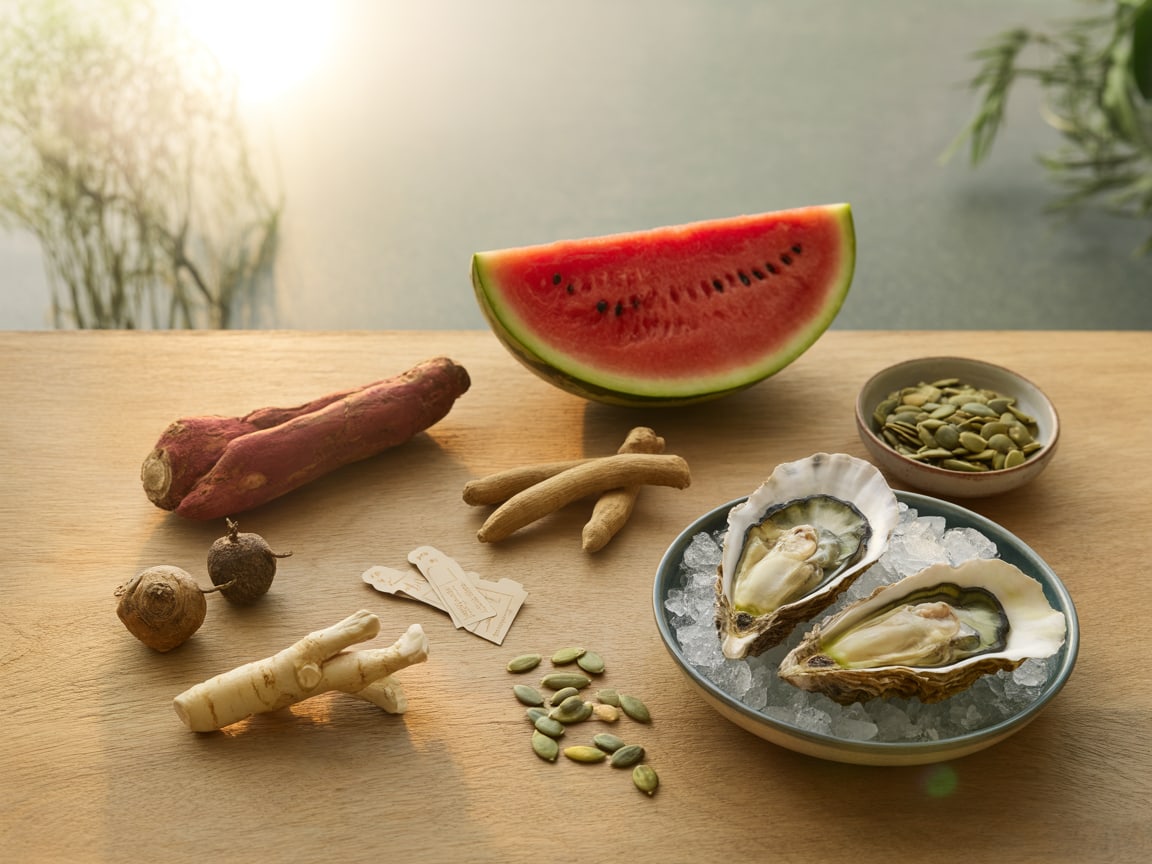
L-Citrulline
An amino acid. Main compound: citrulline itself.
Citrulline takes its name from the watermelon, Citrullus lanatus, where it was first identified; it is also found in melons and cucumbers. Watermelon has been a summer table fruit across Africa and the Mediterranean for thousands of years, and citrulline has been looked at by researchers in studies on men's health.
Panax Ginseng
A root from Korea and northeast China. Main compounds: ginsenosides.
The slow-growing root is steamed and dried to make red ginseng, simmered into soups such as samgyetang and sliced into teas. In Korea it has long been a gift between families, and it is generally studied in research on men's vitality and everyday energy.
Maca Root
A radish-family root from the Andes of Peru. Main compounds: macamides and glucosinolates.
Grown on cold, high plateaus, maca is dried, roasted and ground into flour for porridge and warm drinks, and has been a festival food in Andean villages for generations. It appears in published research on men's wellbeing and mood.
Tongkat Ali
The root of Eurycoma longifolia, a slender rainforest tree. Main compounds: quassinoids such as eurycomanone.
In Malaysia and Indonesia the bitter root is boiled into tea or stirred into coffee, and in Malay folk tradition it has been known as a men's tonic. Researchers have included it in studies on men's health in middle age.
Zinc
An essential mineral. In supplements it usually appears as a mineral salt.
Zinc is found in oysters, beef, lentils and pumpkin seeds. Oysters in particular have a long reputation as a dinner-date food, from Roman banquets to seaside restaurants, and zinc is widely discussed in general nutrition writing about men's health.
A routine chosen once is easier to keep than a resolution remade every night.
Nothing to give up
None of this involves a gym membership, a strict plan, or giving up the glass of wine at dinner. It is about deciding, once, the general shape of an ordinary day, so that it does not need to be reconsidered every evening while the dishes dry.
Where Ridgeforge fits
None of these is a program. Each is a simple choice made once, then kept.
Mornings open with breath and a first set lying down
Before getting up, five slow breaths with knees bent, then a few slow Kegel lifts in the same position. It does not have to be long; it simply has to be there, every morning, before the phone.
Midday holds a seated set and a standing one
At the desk, in the car before walking in, or waiting for coffee: the same lift and release, seated, then standing. Placing these at midday means the evening does not have to carry the whole routine.
Evenings close with the bridge and the squat at a set hour
The bridge on the rug and the deep squat at the counter happen at about the same time on most nights, instead of whenever the day allows, including Ridgeforge with the evening meal if it is part of the routine, so the last hours of the night belong to the two of you.
Common advice versus everyday reality
Some familiar pieces of advice keep getting repeated even after they no longer fit how most evenings actually go.
- MythFeeling less sure of yourself in the bedroom is just age, and not something a man can look at.
- In practiceMany men simply never learned that the pelvic floor has its own exercises, done in ordinary positions for a few minutes a day.
- MythA flat evening calls for a stronger drink or a later night.
- In practiceMany couples describe preferring the opposite: an earlier, slower evening, with the phones in another room.
- MythKegel exercises are only for women.
- In practiceThey are a standard part of men's pelvic routines too, done lying, seated and standing, and nobody can tell when they are happening.
From readers who tried it
★★★★★
My wife and I had stopped lingering at the table after dinner, and I wanted to feel like the man she used to flirt with. I read about the routine on a Sunday and decided to try Ridgeforge alongside the morning breathing. The bottle sits next to the coffee, so I don't have to think about it.
Daniel R., Ohio. September 28, 2026
★★★★★
I liked that nothing here asked me to give anything up. The seated set at my desk is so quiet nobody notices, and Ridgeforge with breakfast became part of the morning without any fuss. It feels good to have something that's just mine before the day starts.
Marcus T., Oregon. August 14, 2026
★★★★☆
Honest reservation: it took me a while to remember the evening set, and I'd like a smaller bottle for trips. Once I tied the bridge to the kettle, it stuck. I've kept Ridgeforge with dinner since early summer.
Ray S., Arizona. July 3, 2026
★★★★★
What made me try it was the part about pace. We started leaving the phones in the kitchen, and I added the routine and Ridgeforge the same week. My wife teases me about the squat at the counter, which I don't mind at all.
Glen P., North Carolina. May 21, 2026
Reviews reflect individual experience. Results vary and are not typical.

Frequently asked questions
Should I do longer sets, or just spread them through the day?
For most men the number of minutes is less of a question than when they happen. This guide describes short sets spread across morning, midday and evening rather than one long session.
Is this a program I must follow every day?
No. The ideas here are choices about positions and timing made once, not a daily log that has to be filled in or restarted.
Where does Ridgeforge fit into all of this?
Ridgeforge appears here as a daily supplement some men keep alongside the routine, taken with a meal. It is presented as a supplement, not a remedy, and the routine itself stands on its own.
Why do evenings seem flatter than they once did?
Many couples describe it the same way: a long day, a late dinner, two phones on the couch. Often it comes down to pace more than anything dramatic, and pace is something two people can talk about.
Do I have to give anything up?
Nothing here involves giving up food, drinks or habits. The focus is only on positions, minutes and timing.
What is the presentation, and how long is it?
It is a sponsored video presentation. The explanatory part lasts about four minutes and walks through an ordinary day, position by position; at the end, Ridgeforge is offered for sale.
Is this guide medical advice?
No. This page and the presentation it links to are sponsored material, not medical advice, and they do not replace a conversation with a qualified healthcare professional.
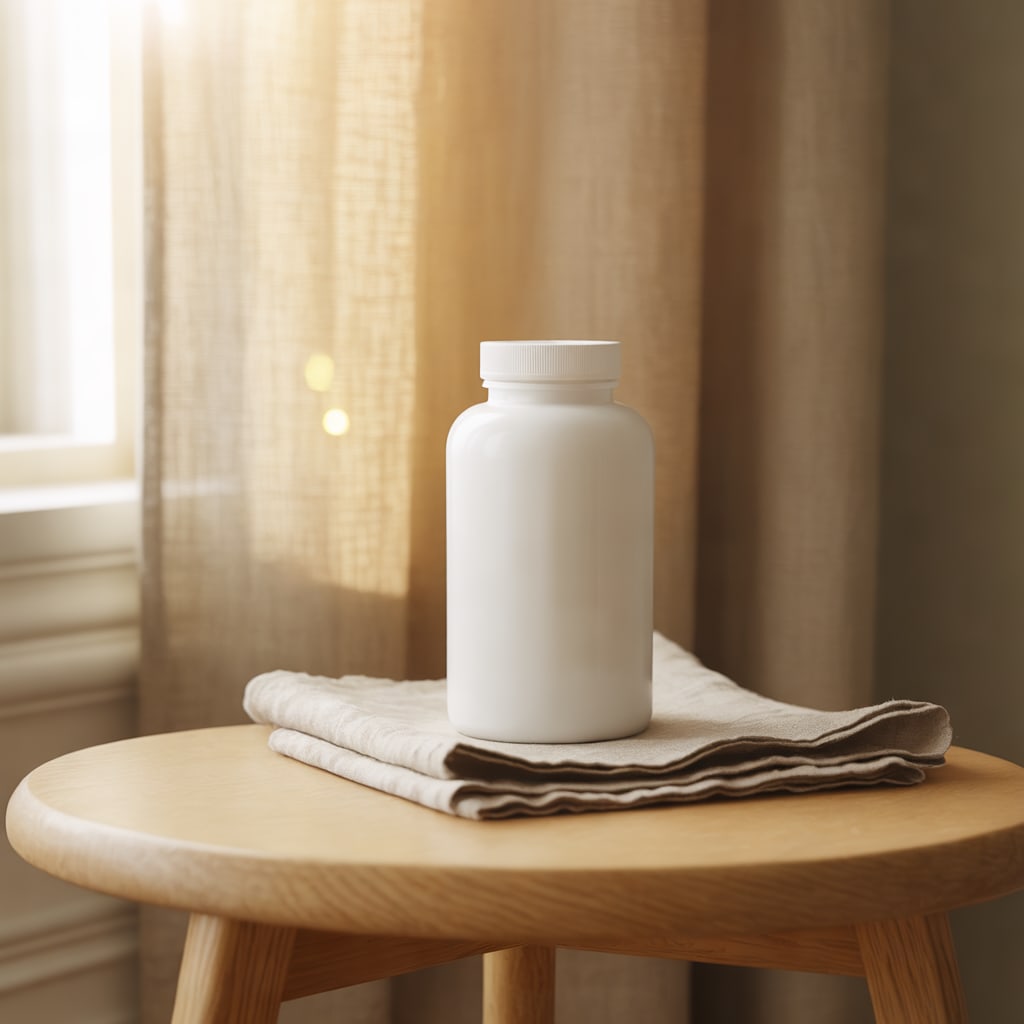
Ridgeforge
A daily supplement made with L-Citrulline, Panax Ginseng, Maca Root, Tongkat Ali and Zinc, chosen to sit alongside the pelvic routine described in this guide.
$59 per bottle
Watch the whole evening routine
The presentation walks through an ordinary day, from the first breath on the rug to the last set before bed, explaining the reasoning behind each position, the positions for closeness, and where Ridgeforge might fit.
Watch the presentationA sponsored video by Ridgeforge. The explanatory part lasts about four minutes, and a product is offered at the end.
Scientific References
These are published studies on the individual ingredients, not on Ridgeforge itself. Most were carried out in other populations and settings, and none of them shows that any supplement treats or prevents anything.
- Coon JT, et al. (2002) — Panax ginseng: a systematic review of adverse effects and drug interactions. Drug Saf. (Systematic review) PMID 12020172
- Dording CM, et al. (2008) — A double-blind, randomized, pilot dose-finding study of maca root (L. meyenii) for the management of SSRI-induced sexual dysfunction. CNS Neurosci Ther. (Randomized trial) PMID 18801111
- Brook AC, et al. (1980) — Absence of a therapeutic effect of zinc in the sexual dysfunction of haemodialysed patients. Lancet. (Randomized trial) PMID 6107409